Hi there, I’am Muyi Bao(包沐亦)
I am currently an M.S. student in Electrical and Computer Engineering at Carnegie Mellon University. My research interests lie in Embodied AI, focusing on building vision-language agents that can understand natural language instructions, interpret visual observations, and produce semantically aligned and physically executable behavior in embodied environments.
At CMU, I am working with Dr. Ji Zhang and Dr. Wenshan Wang on Embodied Navigation. Before joining CMU, I received my B.Eng. degree in Computer Science and Technology from Xi’an Jiaotong-Liverpool University in 2025. During my undergraduate studies, I focused on computer vision and worked with Prof. Guangliang Cheng, Prof. Wei Wang, and Prof. Ming Xu.
My resume can be found here (updated in 2026.9.18) and my email is muyib@andrew.cmu.edu.
I am actively looking for Ph.D. opportunities starting in Fall 2027, with research interests in Embodied AI.
News
- [2026/10] 📈 My Google Scholar citations reached 100 on Oct. 2, 2026.
- [2026/09] 📄 IntentNav was accepted to CoRL 2026.
- [2026/02] 📄 Our survey paper, Vision Mamba in Remote Sensing, was accepted by Remote Sensing.
- [2025/11] 📄 NUMINA was accepted to Findings of EMNLP 2025.
- [2025/08] 🎓 I joined Carnegie Mellon University as an M.S. student in Electrical and Computer Engineering.
- [2025/07] 📄 FTCFormer was accepted by ECAI 2025.
- [2025/06] 🎓 I received my B.Eng. degree in Computer Science and Technology from Xi'an Jiaotong-Liverpool University.
- [2025/02] 📄 AlexCapsNet was accepted by IEEE Access.
- [2024/12] 📄 Performance Analysis of Rendering Optimization was accepted by UIC 2024.
- [2021/06] 🎓 I joined Xi'an Jiaotong Liverpool Unverisity as a Bachelor of Engineering in Computer Science and Technology.
Research Projects (* Equal contribution)
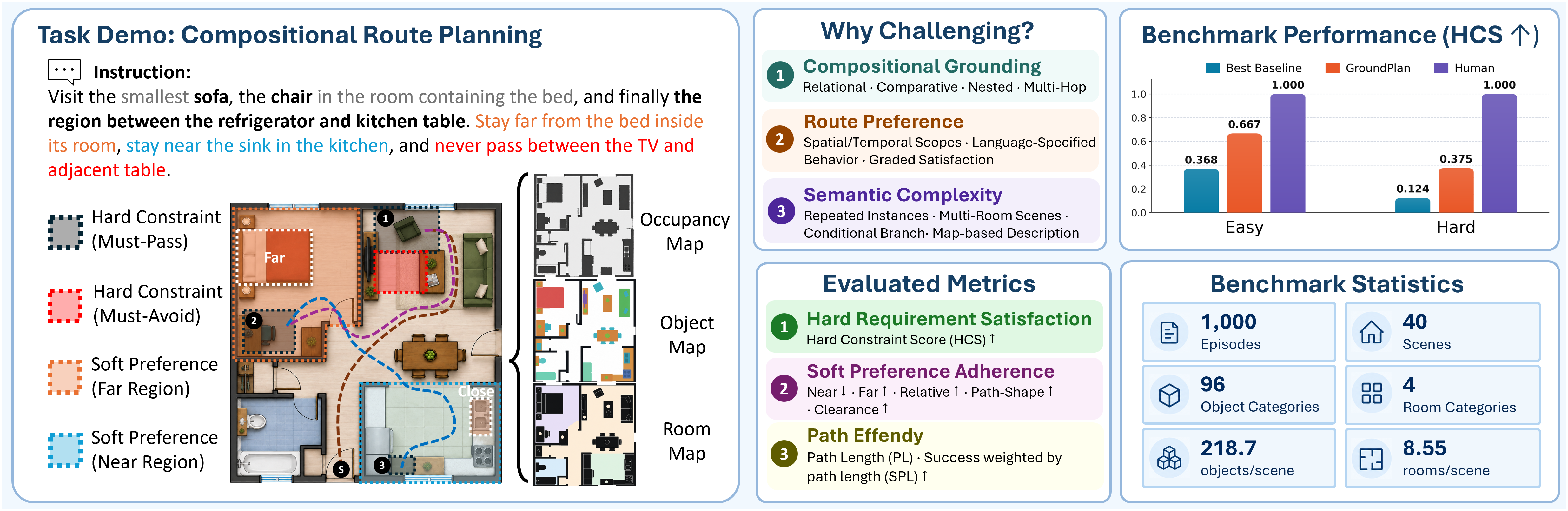 | Map2Route: Benchmarking Compositional Language-Grounded Route Planning over Semantic Maps arXiv, 2026 Map2Route is a human-curated benchmark for compositional language-grounded route planning over pre-built semantic maps. Given a semantic map, an initial robot position, and a natural-language instruction without explicit goal coordinates, the task is to generate a complete route that faithfully realizes the instruction. We evaluate several representative baselines and Grounding2Route, our proposed method, showing that Map2Route remains a challenging benchmark and is still far from saturated. |
 | Goal2Pixel: Grounding Goals to Pixels for Vision-Language Navigation arXiv, 2026 Goal2Pixel reformulates Vision-and-Language Navigation in Continuous Environments (VLN-CE) as a pure navigable-pixel grounding problem, using the image plane as a unified spatial interface between VLM reasoning and robot motion. For history representation, Goal2Pixel introduces Visibility-Aware Keyframe Memory (ViKeyMem), cutting training/inference time by around 50%. Goal2Pixel achieves 54.1%/48.1% SR on R2R-CE/RxR. |
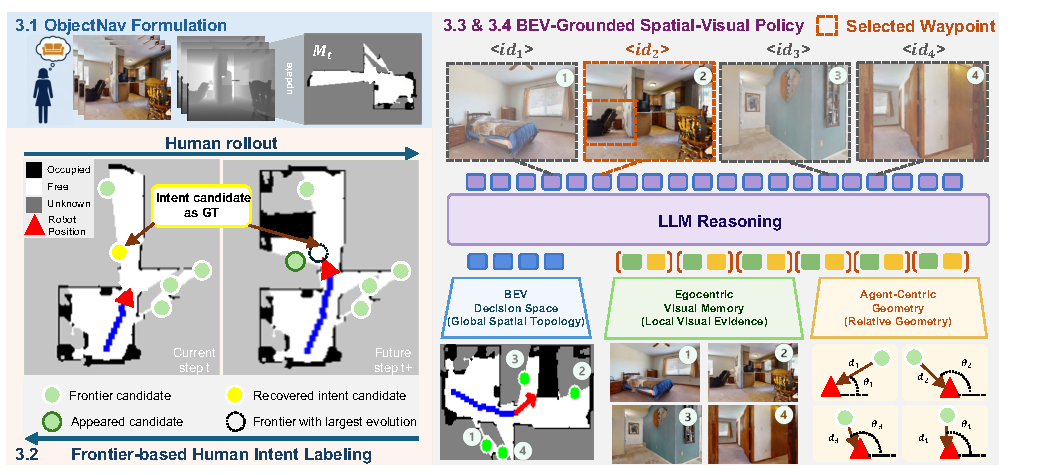 | IntentNav: Learning Spatial-Visual Object Navigation from Human Demonstrations Conference on Robot Learning (CoRL), 2026 IntentNav learns human-like ObjectNav policies from 2.36 million samples, without relying on oracle shortest paths. The model unifies frontier exploration and target commitment in a BEV-grounded spatial-visual decision space and achieves 53.8% SR on MP3D, 70.5% SR on HM3D-v1, and 82.2% SR on HM3D-v2. |
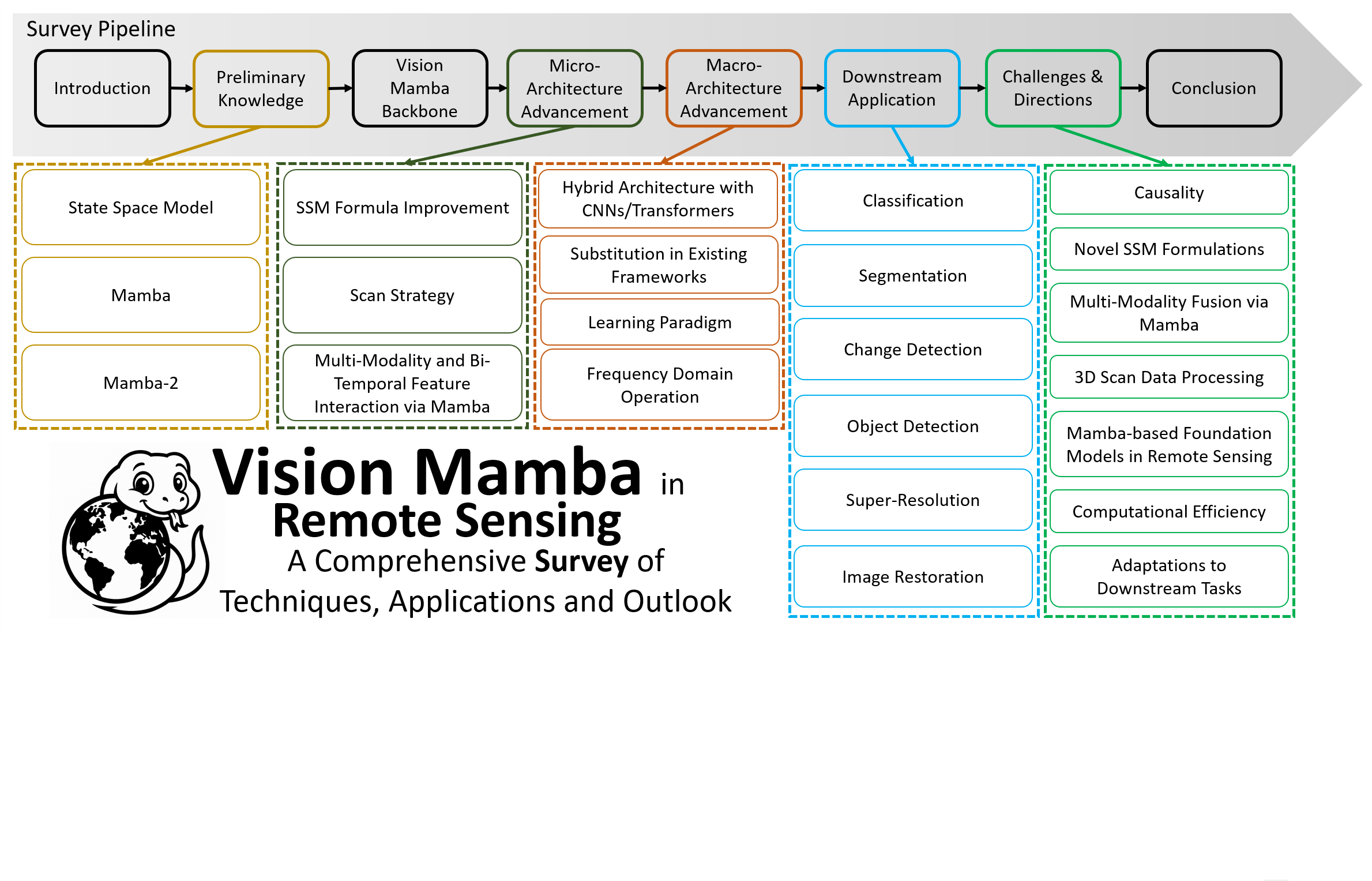 | Vision Mamba in Remote Sensing: A Comprehensive Survey of Techniques, Applications and Outlook Remote Sensing, 2026 This is the first survey to systematically review approximately 120+ Mamba-based studies in remote sensing. It provides a structured overview of the field organized into seven parts, covering foundations, model architectures, downstream applications, and future research directions. |
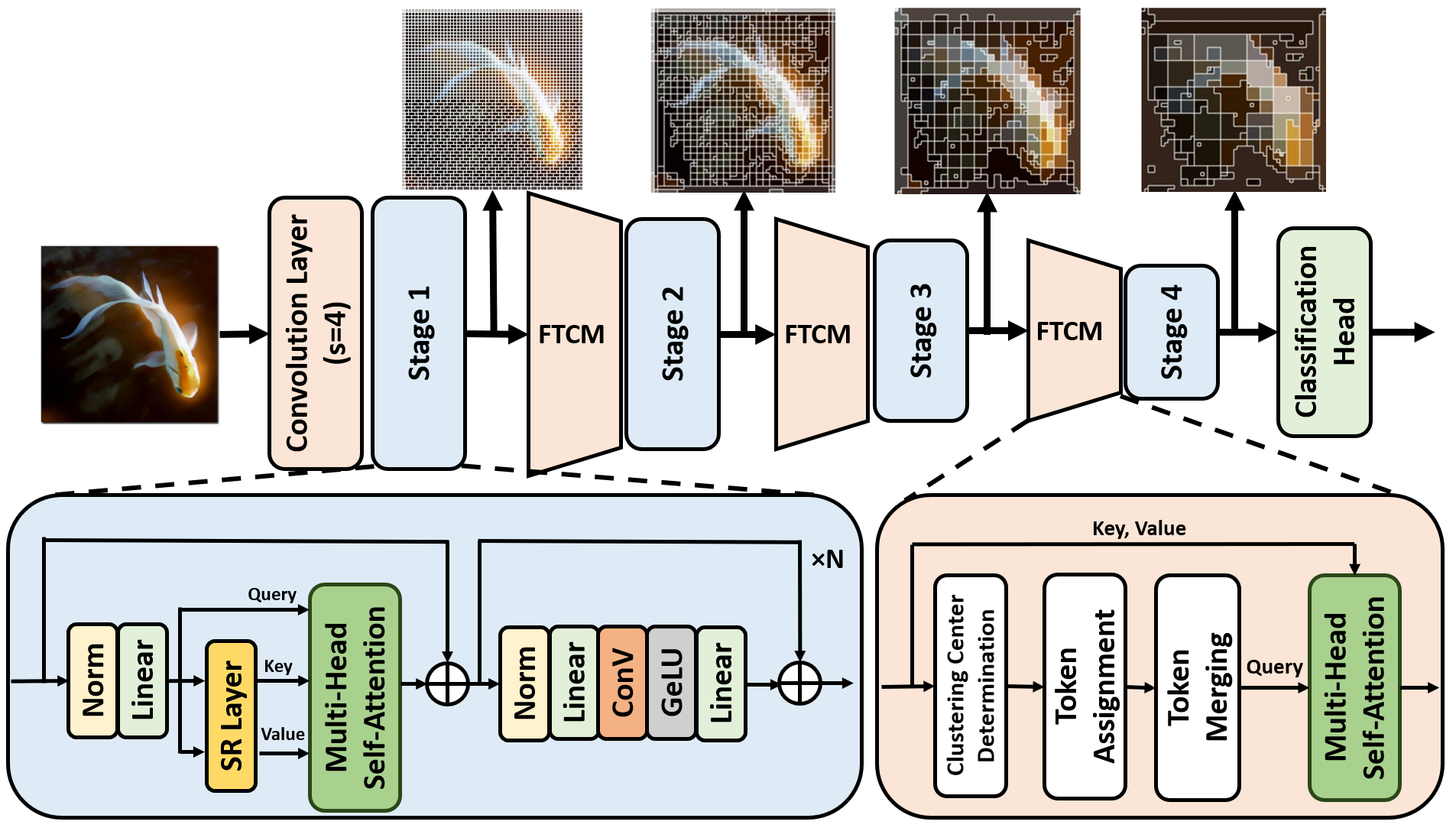 | FTCFormer: Fuzzy Token Clustering Transformer for Image Classification European Conference on Artificial Intelligence (ECAI), 2025 FTCFormer introduces a clustering-based token downsampling mechanism that dynamically allocates more tokens to informative image regions and fewer tokens to less important areas. Evaluated on 32 image classification datasets across diverse domains, FTCFormer consistently outperforms the TCFormer baseline. |
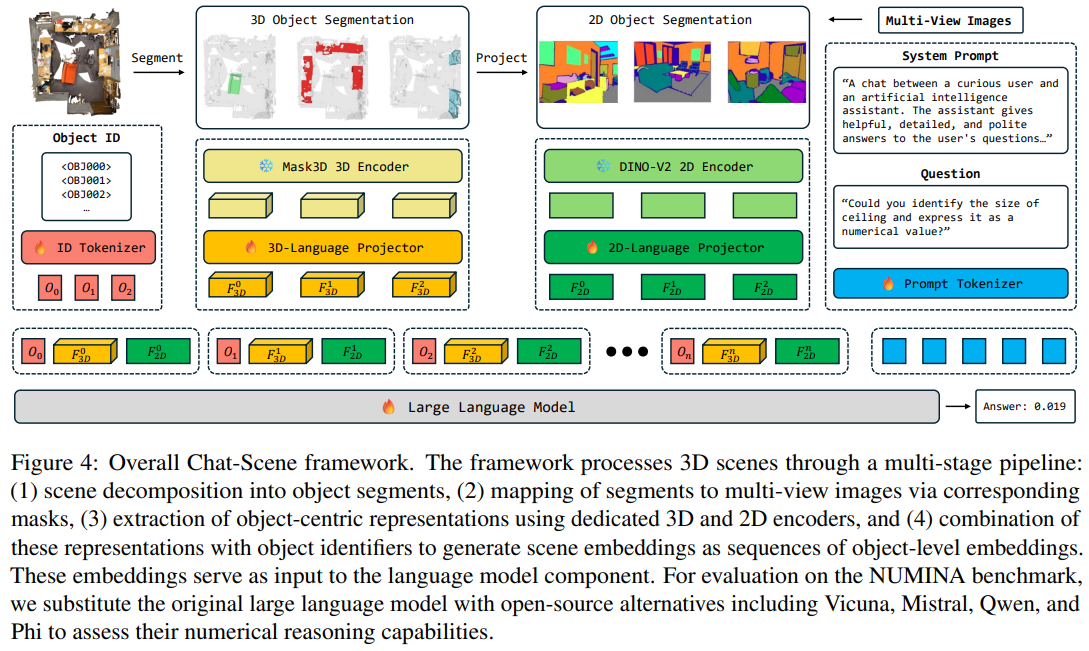 | NUMINA: A Natural Understanding Benchmark for Multi-dimensional Intelligence and Numerical Reasoning Abilities Findings of EMNLP, 2025 NUMINA is a large-scale benchmark for fine-grained spatial understanding and numerical reasoning in 3D indoor environments. It contains 74,526 question-answer pairs across fact validation, prompt matching, and numerical inference, revealing clear limitations of current models on precise quantity, distance, and volume reasoning. |
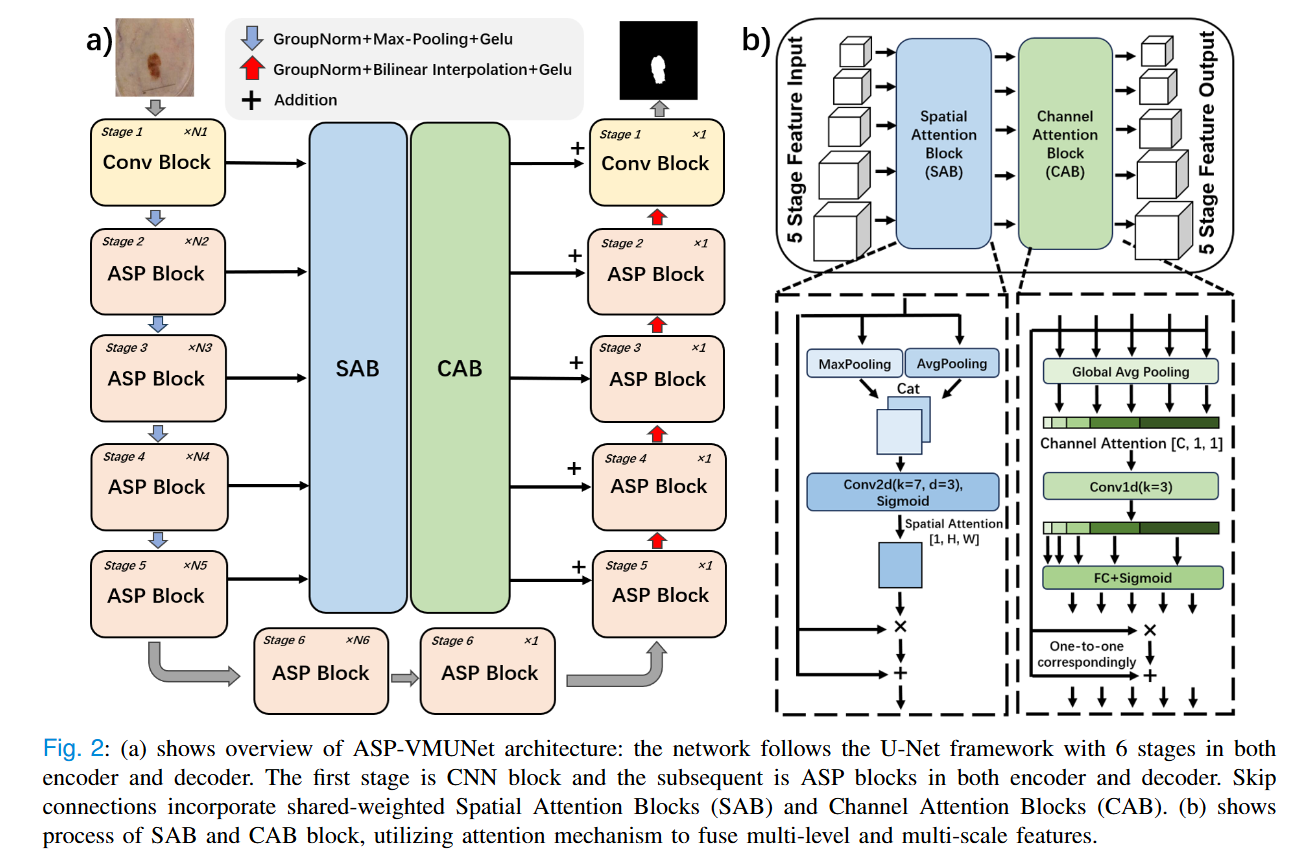 | ASP-VMUNet: Atrous Shifted Parallel Vision Mamba U-Net for Skin Lesion Segmentation arXiv, 2025 ASP-VMUNet introduces a hybrid CNN-Mamba architecture for skin lesion segmentation, featuring: 1) an atrous scan strategy to suppress background interference and enlarge the receptive field; 2) a shift-round operation for cross-segment feature interaction; and 3) attention-based fusion of local and global features. ASP-VMUNet achieves state-of-the-art performance on PH2/ISIC 2016-2018. |
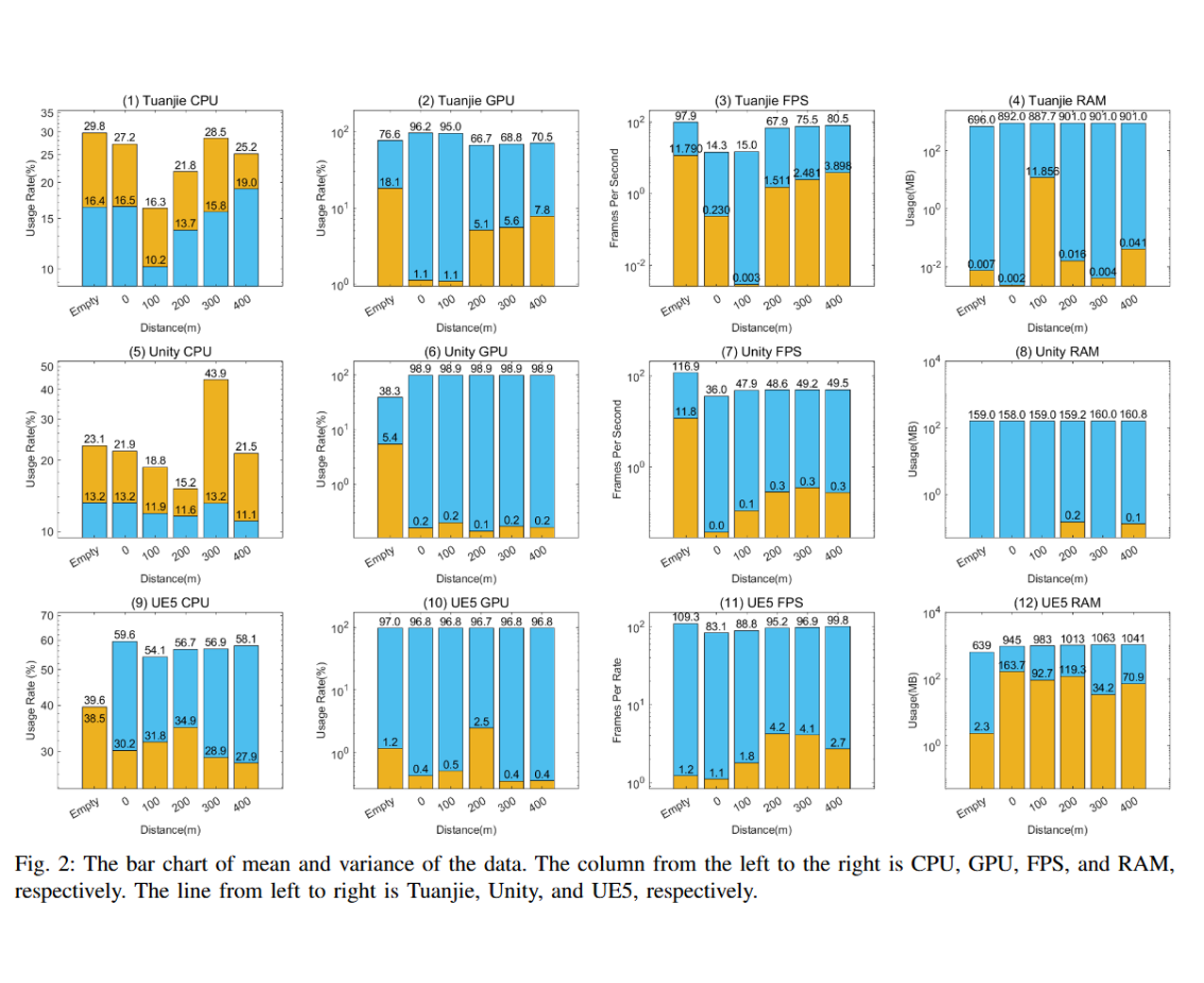 | Comparative Performance Analysis of Rendering Optimization Methods in Unity Tuanjie Engine, Unity Global and Unreal Engine IEEE International Conference on Ubiquitous Intelligence and Computing (UIC), 2024 This work compares Unity Global's Level of Detail, Tuanjie Engine's Virtual Geometry, and Unreal Engine 5's Nanite across FPS, GPU, CPU, and memory usage. The results show that Nanite achieves the best overall performance, while Tuanjie's Virtual Geometry is stronger than Unity LOD at distant views but weaker at close range. |
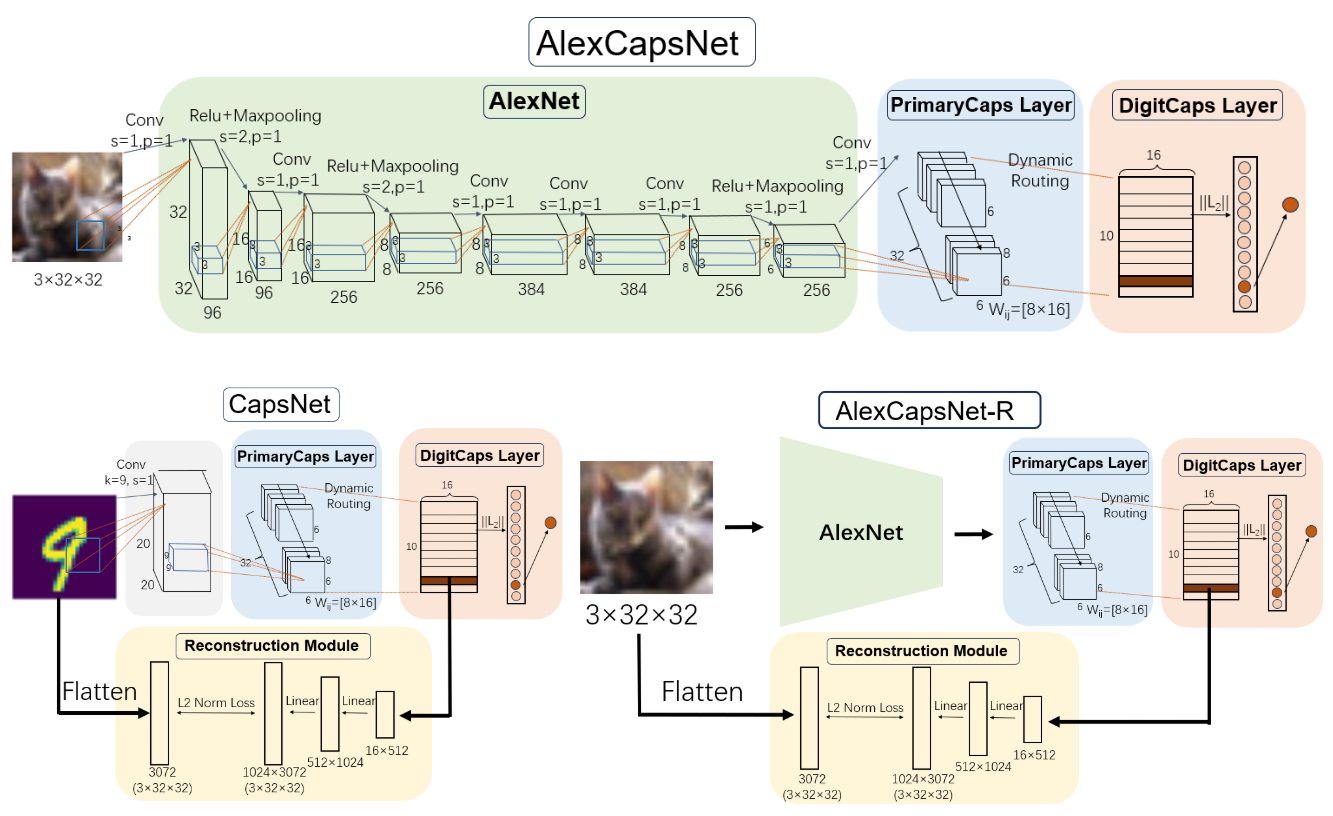 | AlexCapsNet: An Integrated Architecture for Image Classification with Background Noise IEEE Access, 2025 AlexCapsNet combines AlexNet-based feature extraction with CapsNet to improve image classification under background noise. Across seven datasets, it improves robustness over the original CapsNet, and removing the reconstruction module further benefits complex-background settings. |